Translated from the Chinese original with AI assistance. Updated September 19, 2026.
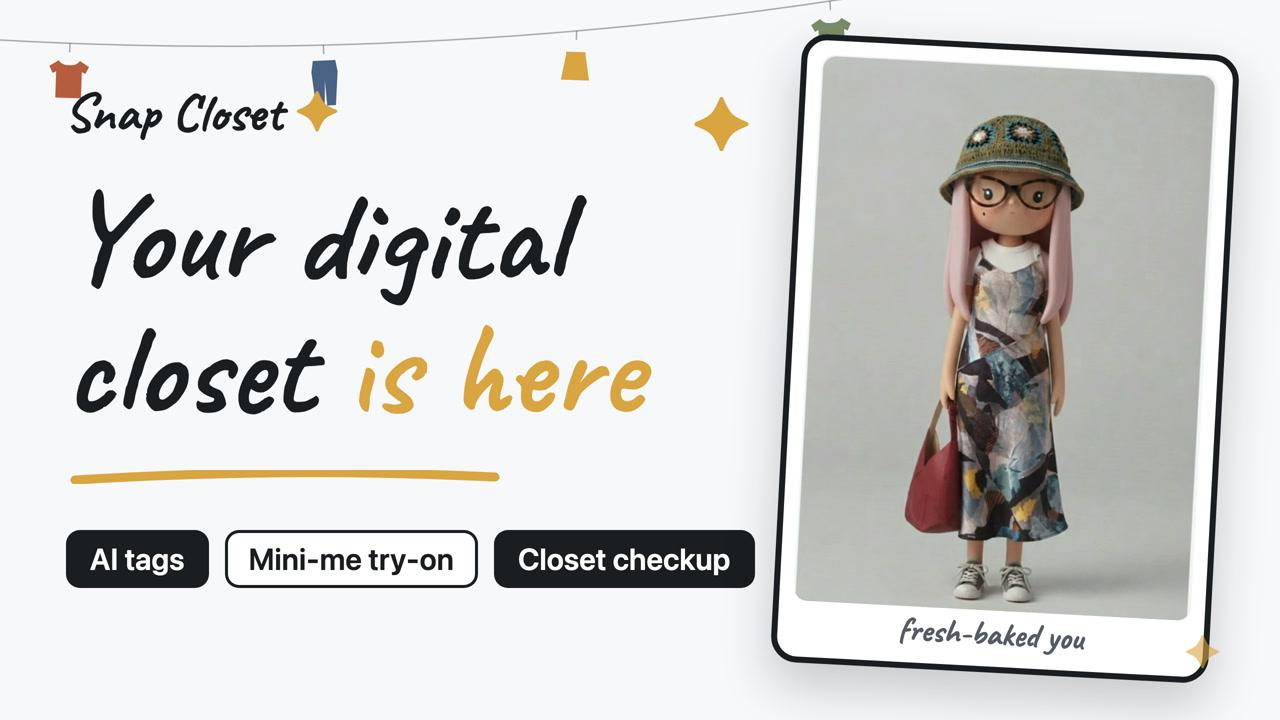
Snap Closet is finally live on both iOS and Android, and I've entered it in Shipaton!
When I started two years ago, it was still called Handy Closet. The reason for building it was simple: I had plenty of clothes but always felt like I was missing something. I kept wearing the same few pieces, then buying more of the same. I wanted to get that mess of clothes into something I could browse anywhere, and get useful outfit suggestions with a few taps. But coding everything the old-fashioned way was harder than I expected, and the project sat untouched for a year. With the improvements in AI models this year, I managed to tear it down and rebuild it in just two or three months. For me, that's quite an achievement.
Indie development: speed comes first
At the start, I naturally copied the way we worked at my day job: Figma for design, Atlassian for task management. Even after work, I was creating tickets to guilt myself into doing more work. Six months of grinding away on my own, and I hadn't even reached 40%. I wasn't happy with how the app looked, and I couldn't find enough time outside work to fix it. So I shelved it.
It wasn't until April or May this year, when models such as Fable and GPT-5.6 improved dramatically, that I thought about picking it up again. This time really did feel different. The output was so fast, and so good. With a little engineering discipline, and a habit of turning reusable workflows into scripts and Skills, AI could handle most of the day-to-day development with very little supervision.
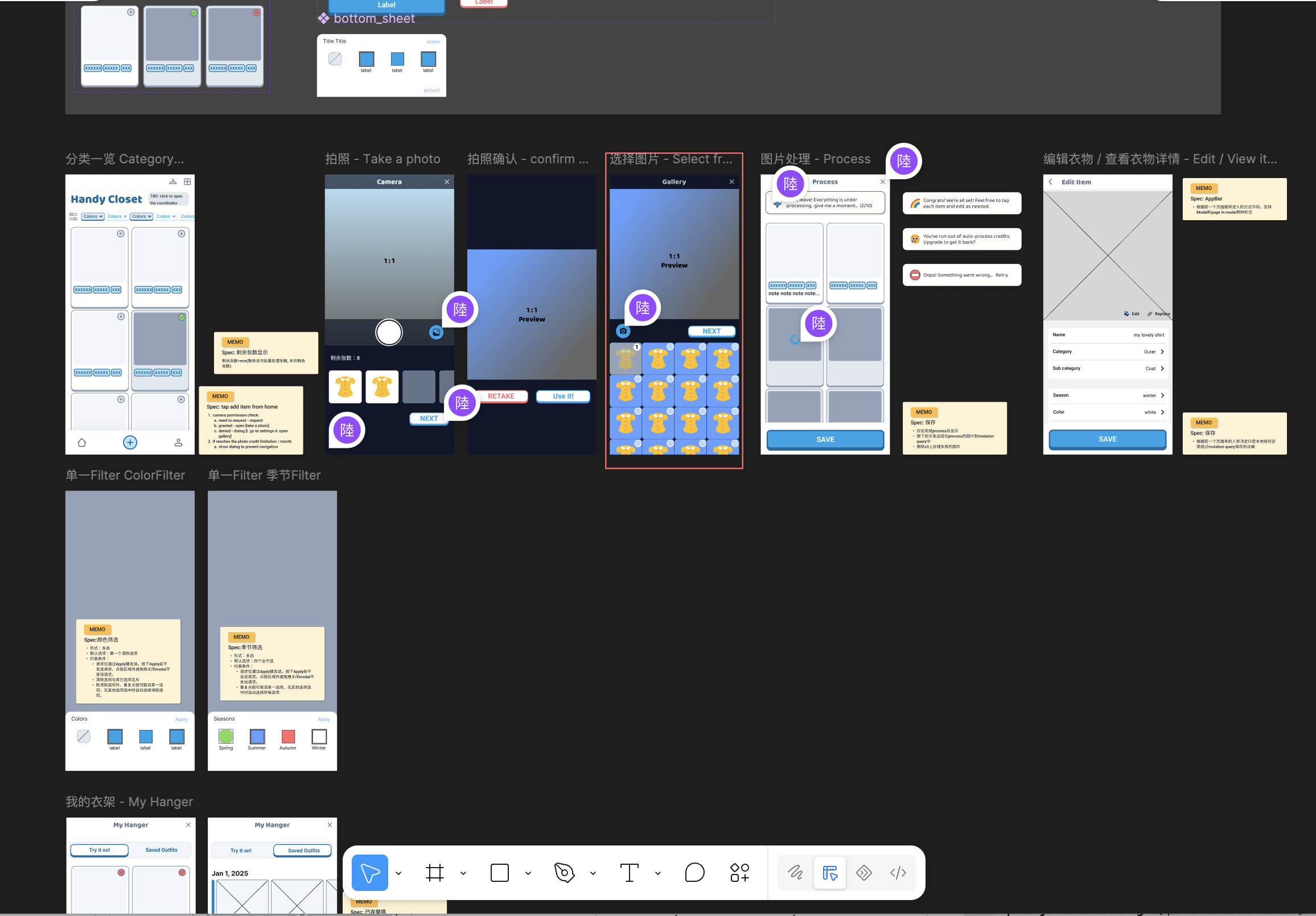
For example, I wrote a design-system Skill to replace all that painstaking work in Figma. A few rounds of conversation later, the entire design system had been rewritten, and the parts already implemented had been updated to follow it. The layers I had defined for the project stayed intact, too: Design Tokens (named design values such as colors and spacing), Atomic Components (basic components such as buttons and input fields), and Composed Components (functional components assembled from those building blocks)[3][4]. Looking back at all the effort I'd spent learning how to add Properties and Variables in Figma, it was a sunk cost I should have been more willing to let go of.
That effort wasn't entirely wasted, of course. The structure I'd built by hand must have saved me a lot of prompting about design principles and coding conventions. And the Skill's results depended on the combination of the model's capabilities, the quality of the prompts, and my own taste. That's something I'd like to write about another time. What I want to get at here is how much you have to unlearn when going from an individual contributor on a team to the product owner of your own codebase. A lot of polished intermediate work exists to explain things and get collaborators on the same page. When it's just you and an AI, the steps between providing input and reviewing output can be a black box. Communication between people and agents, and between agents themselves, needs a different interface. It should be extremely lightweight: a few Markdown or HTML documents, for example.
With less time spent explaining and packaging work for other people, the satisfaction of getting something done feels less diluted. Running agents in parallel also cuts the wait between those moments. Those quick, steady little dopamine hits kept me going, and in less than three months the app was live on both platforms. I couldn't have imagined that pace before. Someone might ask, “What's the best vibe-coding workflow for an indie developer?” It's a worthwhile question, but we can't spend too long getting ready. The longer the run-up, the harder it is to keep going[1]. More than asking how to do it well, I'd ask how to get it finished. Pick a good model, set aside all the talk of agents, harnesses, MCP, and Skills, and just use the chat box to move your plan forward faster than you could on your own. That first sense of accomplishment is a first step toward actually shipping.
User experience still matters
“Snap” comes from “snapshot.” It suggests something quick and effortless, just a click of the camera. That's how I want Snap Closet to feel, so I've put a fair amount of thought into the details of the interface and the way its features work.
- Take the shortest route. The button for adding clothes sits right in the middle of the bottom navigation, where it's easy to spot, with no menu to get through first. When someone decides to organize their closet, they can get straight to it. Instead of the clusters of categories and nested layouts you see in shopping apps, the home screen lays out the items directly. You can switch between two- and four-column grids to see more at once and quickly pick out a piece.
- Keep slow tasks out of the way. On-device models remove backgrounds and crop photos as they're taken. AI recognition and classification run in batches in the background, so you can keep uploading without waiting. Finished items appear on the home screen one by one.
- Offer choices instead of text boxes. Almost all the prompts sent to the models are assembled in the backend from simple actions: choosing an option, taking a photo, or uploading an image. Even in Ask your closet, where users ask AI for outfit ideas, I've given the chat box less space and added the option to use a reference image. The AI can work from the mood of that image, so users don't have to spend as much effort putting it into words.
I also want Snap Closet to feel friendly and lively. The colorful clothing icons, the card animations, the little transitions when you earn an achievement all give it some warmth. They're also a way of showing how much I care about it.
I don't think chat is the final form of AI applications. Steve Krug's Don't Make Me Think[2] is still a UI and UX principle worth pursuing. Instead of asking users to compose a spell that will conjure up what they have in mind, I'd rather fit AI into things they already do and make those things much less work. That's what makes an application applicable. Organizing clothes, sorting them, figuring out outfits, deciding what to let go of: I already do these things myself. They're just tedious, inefficient, and easily pushed aside by things I have to do. I want to put my closet on my phone, with AI behind it making the whole routine easier and more enjoyable.
Where to go from here
There are already plenty of digital closet apps, but each developer comes at the problem from a different angle. There are still many directions Snap Closet could take.
The virtual try-on and credit system could lead to more playful or social features. Looking at the life of a garment, there might be ways to connect with other platforms when buying or selling clothes. Or I could keep focusing on organization, helping people make better use of what they already have. I'll keep exploring where this app goes next. That's an interesting part of the work, too.
Whatever direction it takes, I want Snap Closet to stay simple and easy to use. The same goes for the other apps I plan to release: I want AI to help with the things people find difficult and make everyday life a little easier.
Product links
- App Store: Snap Closet
- Google Play: Snap Closet
- Website: snap-closet.com
- Shipaton entry: Snap Closet on Devpost
References
- Woolley, K., & Fishbach, A. (2018). It's about time: Earlier rewards increase intrinsic motivation. Journal of Personality and Social Psychology, 114(6), 877–890. Abstract · DOI. The study examines reward timing and intrinsic motivation; the connection to indie development is my own reflection.
- Krug, S. (2014). Don't Make Me Think, Revisited: A Common Sense Approach to Web (and Mobile) Usability (3rd ed.). New Riders. The author's book page.
- Design Tokens Community Group. (2025). Design Tokens Format Module 2025.10. Specification. The definition of a token follows this community specification, which is not a W3C Standard.
- Frost, B. Atomic Design, Chapter 2: Atomic Design Methodology. Book chapter. The book distinguishes Atoms, Molecules, Organisms, Templates, and Pages. The three layers described here are how I organized this project, rather than the book’s original hierarchy.